But they have been wrong before - and they might be wrong now.
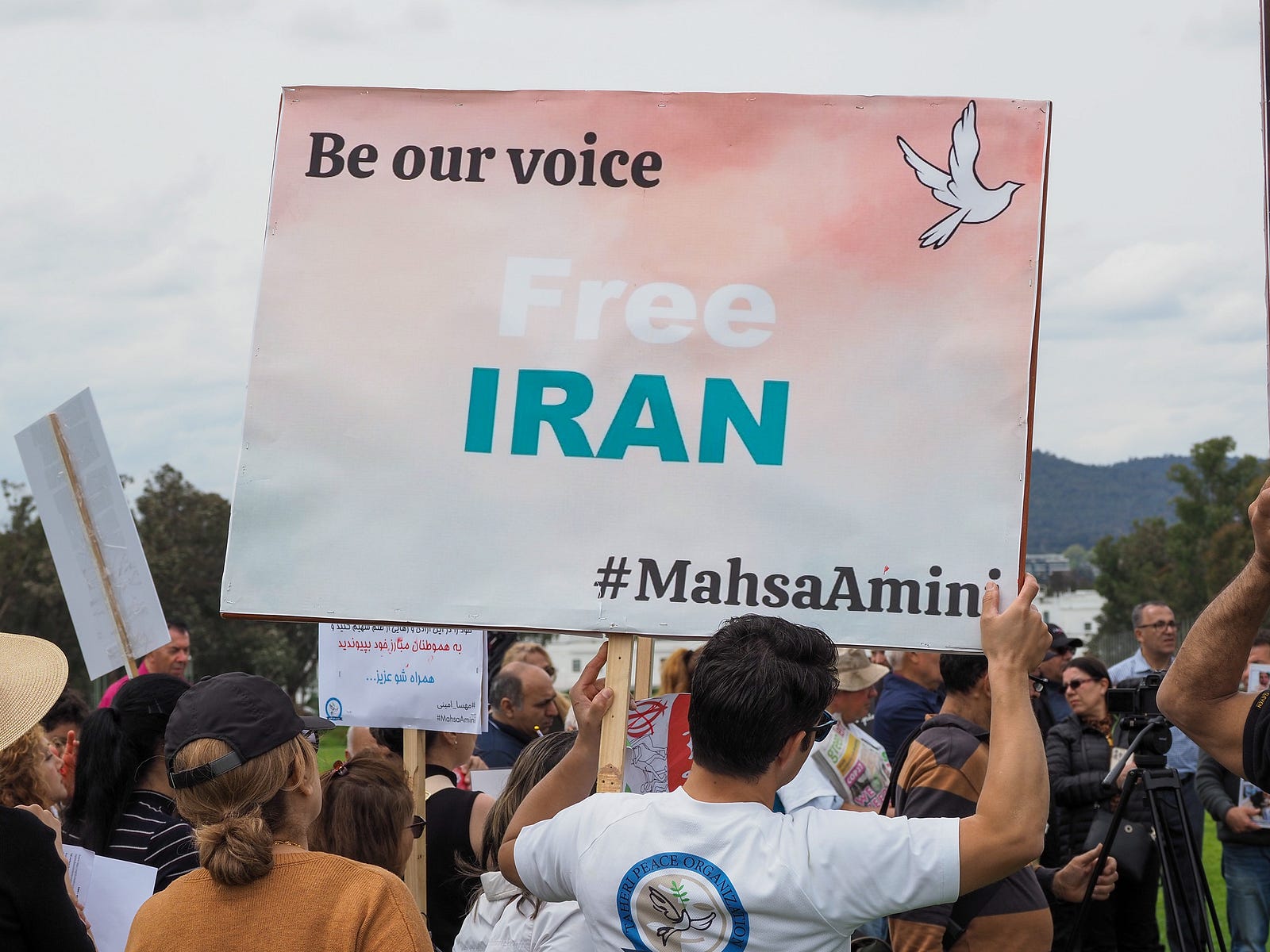
Their current assessment envisions a long, dangerous standoff: periods of intense fighting, temporary pauses, failed negotiations and renewed escalation, with neither Tehran nor Washington able to secure a decisive political victory.
They may be right, of course.
Iran’s rulers have repeatedly demonstrated that they are willing to absorb terrible economic damage, international isolation and civilian suffering to preserve the Islamic Republic. Unlike democratic governments, the regime does not need to maintain broad public support. It needs to keep the Revolutionary Guard, intelligence services and internal-security apparatus sufficiently loyal to suppress opposition.
But intelligence assessments are not prophecies. They are snapshots built from incomplete information, uncertain assumptions and attempts to predict human behavior. American intelligence agencies have gotten such predictions wrong before — sometimes spectacularly.
Afghanistan is the most obvious recent example.
By August 2021, U.S. officials understood that the Taliban was advancing and the Afghan government was in danger. But intelligence assessments reportedly estimated that Kabul could be isolated within 30 days and fall within 90. The Taliban entered the capital four days later.
The agencies possessed many of the underlying facts. They knew the Afghan government was corrupt. They knew its military depended heavily on American air power, contractors and logistical support. They knew morale was deteriorating and the Taliban was negotiating local surrenders.
What they failed to predict was how quickly those weaknesses would interact.
Political systems do not always collapse gradually. They can appear stable until confidence suddenly evaporates. Soldiers stop fighting because they believe everyone else will stop fighting. Commanders make private arrangements. Officials move their families and money. Provincial leaders defect. A government that looked fragile but functional on Monday can cease to exist by Sunday.
That lesson should inform how Washington reads the latest assessment of Iran.
American agencies are very good at counting missile launchers, identifying command centers, intercepting communications and estimating physical damage. They are less reliable when asked to predict when frightened leaders will compromise, whether military commanders remain loyal or how a population will respond to war.
The conclusion that Iran is “unlikely to move” is not a measurement. It is a behavioral forecast.
Iran’s government may indeed be more resilient than Washington hopes.
The U.S. has been on war footing with Iran for months. The Revolutionary Guard has spent decades preparing for internal unrest and foreign attack. Bombing could temporarily strengthen Iranian nationalism, allowing a deeply unpopular regime to portray itself as the defender of the country.
Yet the opposite possibility cannot be dismissed. Iran has lost senior leaders, military hardware and critical infrastructure. Its economy is under enormous pressure. Its supreme leadership remains opaque, while reported tensions between pragmatists and hard-liners suggest that authority may be more fractured than official statements reveal.
Iran can still issue defiant communiqués. That does not necessarily mean its leaders trust one another, that military units are receiving coherent orders or that every commander would obey a demand for continued sacrifice.
The current assessment may also be right about the immediate future but wrong about what comes next. Another week of strikes may not change Tehran’s position. Several months of military losses, disrupted trade, internal shortages and elite defections might.
That is the danger of treating a nonlinear situation as though current trends will continue indefinitely. Afghanistan’s government survived year after year — until it suddenly did not.
None of this means President Trump should disregard intelligence warnings. The agencies may be correctly cautioning him against believing that one more wave of bombing will magically produce Iranian capitulation. Air power can destroy military capabilities, but it cannot guarantee a trustworthy negotiating partner or create a coherent government capable of enforcing an agreement.
Still, Trump should ask what assumptions lie beneath the assessment. How confident are the analysts? Are there dissenting views? What evidence would cause the agencies to revise their conclusion? Are they measuring Iran’s public statements, or its actual internal cohesion?
Most important, Washington must prepare for both possibilities: a regime capable of sustaining a prolonged war and one that begins to fracture much faster than expected.
The United States cannot build its strategy around the hope that Iran is about to collapse. But neither should it assume the Islamic Republic is an immovable object simply because intelligence analysts cannot yet see movement.
The agencies may be right that this war will drag on. They were also confident that Kabul had weeks or months.
It had four days.
(Contributing writer, Brooke Bell)